
Case Study
When Expertise Isn’t Enough: What 223 Students Reveal About Tutor–Student Compatibility
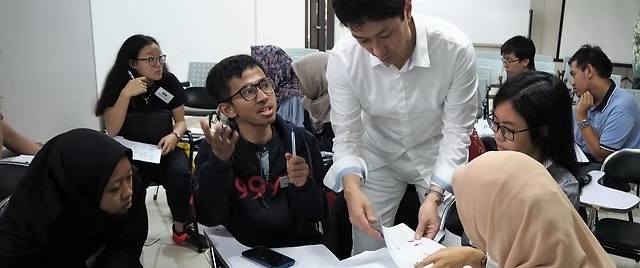
When Expertise Isn’t Enough
Finding a tutor usually begins with academic questions.
Does the tutor know the subject? What qualifications do they have? How much experience do they have? Which curriculum do they teach? What results have their students achieved?
Those questions matter.
But they answer only one part of a fundamentally interpersonal problem.
A student does not learn from a résumé. A student learns through repeated interaction with another person.
That interaction requires the student to do things that can feel surprisingly vulnerable: admit confusion, expose misconceptions, attempt incomplete answers, ask questions that may feel obvious, request another explanation, disagree with the tutor, and acknowledge failure.
So an academically excellent tutor can still become an ineffective tutor for a particular learner if the relationship suppresses those behaviours.
A real-world study of 223 students and seven tutors offers unusually direct evidence for this distinction.
The study
In 2011, Esther Chng, Elaine H. J. Yew, and Henk G. Schmidt published a study titled “Effects of tutor-related behaviours on the process of problem-based learning” in Advances in Health Sciences Education.
Primary source: Chng, E., Yew, E. H. J., & Schmidt, H. G. (2011). Effects of tutor-related behaviours on the process of problem-based learning. Advances in Health Sciences Education, 16, 491–503. DOI: 10.1007/s10459-011-9282-7
The participants were second-year science students from 13 randomly selected classes at a polytechnic in Singapore.
Of 262 students initially involved, complete data from 223 students were used.
They were taught by seven tutors, with each tutor rated by an average of approximately 32 students.
The students were studying the same Immunology problem involving the structure and functions of antibodies.
That consistency matters: the researchers were not simply comparing tutors teaching unrelated subjects under unrelated circumstances.
They were investigating differences in tutor behaviour within the same learning environment.
Three very different meanings of “good tutor”
The researchers separated tutor effectiveness into three dimensions.
- Subject-matter expertise
Does the tutor actually possess strong academic knowledge of the subject?
This is the dimension most conventional tutor-search systems naturally prioritize.
It includes content knowledge and the tutor’s ability to use that knowledge during learning.
- Cognitive congruence
Can the tutor work at the student’s intellectual level?
Cognitive congruence concerns whether tutors can express themselves using language, concepts, explanations, and reasoning that students can readily understand.
A person may understand advanced Mathematics extremely well while still being unable to explain an elementary misconception in a way that makes sense to a particular learner.
- Social congruence
Can the student and tutor interact in a way that supports learning?
Social congruence concerns the tutor’s interpersonal qualities: informal and empathic communication, genuine interest in students, approachability, and the creation of an environment where students feel able to exchange ideas openly.
The questionnaire used in the study therefore did not treat “good teaching” as a single variable.
It deliberately distinguished knowledge, explanatory accessibility, and interpersonal interaction.
That distinction is crucial.
They measured learning, not simply whether students liked the tutor
The researchers did not merely ask students whether their tutors were pleasant.
Student learning was measured throughout the learning process.
The particular problem-based-learning model used at the institution contained three major phases.
Phase 1: Problem analysis
Students investigated the problem, activated prior knowledge, generated hypotheses, identified what they needed to learn, and discussed initial ideas.
Phase 2: Self-directed learning
Students independently researched and developed their understanding while tutors periodically interacted with teams, monitored progress, and facilitated knowledge construction.
Phase 3: Reporting and discussion
Students returned to present, synthesize, defend, evaluate, and refine what they had learned.
After each phase, students completed a concept-recall assessment designed to estimate how their knowledge was developing.
Then, after the final phase, students completed an essay assessment measuring the depth of their scientific understanding and their ability to connect relevant concepts.
The researchers also statistically controlled for pre-existing GPA, using prior academic performance as a covariate.
This reduced the possibility that the findings merely reflected stronger students happening to receive particular tutors.
What happened?
The strongest result concerned social congruence.
It significantly influenced learning after every measured stage.
Stage Statistical result Problem analysis F(2,219) = 10.38, p < .01 Self-directed learning F(2,219) = 9.83, p < .01 Reporting/discussion F(2,219) = 6.51, p < .01 Final achievement essay F(2,219) = 4.914, p < .01
Even more strikingly, subject-matter expertise and cognitive congruence did not show statistically significant effects on the three intermediate learning-process measures in this particular study.
Social congruence did.
That does not mean academic expertise was irrelevant.
When final achievement was measured using the essay assessment, all three dimensions were significant.
Subject-matter expertise:
F(2,219) = 7.74, p < .01
Cognitive congruence:
F(2,219) = 7.74, p < .01
Social congruence:
F(2,219) = 4.914, p < .01
So the scientifically defensible conclusion is not:
Academic knowledge does not matter.
It plainly does.
The more interesting conclusion is:
Academic knowledge does not appear to be the whole mechanism through which effective tutoring happens.
During the actual progression of learning measured in this study, interpersonal social congruence exerted an independent—and particularly visible—influence.
Why might interpersonal fit affect learning?
Consider what learning something difficult actually requires.
A student may need to say:
- “I don’t understand.”
- “Can you explain that again?”
- “I think the answer might be this, but I’m not sure.”
- “That explanation didn’t make sense to me.”
- “Why can’t I solve this the other way?”
- “I forgot something I probably should already know.”
- “I made the same mistake again.”
Every one of those statements reveals information.
And every one of them can also carry interpersonal risk.
A student who expects impatience, embarrassment, judgment, dismissal, excessive formality, or hostility may decide not to reveal that information.
The tutor then receives an incomplete picture of the learner.
The tutor may believe the student understands.
The student may pretend to understand.
The misconception survives.
That means psychological comfort is not merely an emotional bonus added after “real teaching.”
It can affect the information flow on which teaching depends.
A tutor cannot effectively diagnose confusion that a student will not reveal.
What the original researchers proposed
The authors argued that socially congruent tutors are better able to establish informal relationships and create a less threatening environment.
That environment makes students more comfortable expressing opinions and proposing ideas—even when those ideas might initially be inaccurate.
Expressing those ideas matters because misconceptions can then become visible, challenged, refined, and replaced.
The interpersonal relationship therefore changes what intellectual material becomes available for the tutor and student to work with.
That gives us a plausible chain:
Interpersonal comfort
→ greater willingness to communicate
→ greater disclosure of uncertainty and misconceptions
→ richer tutor–student interaction
→ more opportunities for feedback and correction
→ improved learning
This is a substantially stronger proposition than simply saying:
“Students learn better from tutors they like.”
An academically strong tutor can still be the wrong tutor
Imagine two academically qualified Physics tutors.
Tutor A
Tutor A knows Physics exceptionally well.
Their explanations are technically accurate.
But for a particular student, their interaction feels intimidating. The tutor moves quickly, reacts visibly to repeated mistakes, communicates formally, and expects the student to interrupt whenever something is unclear.
The student rarely interrupts.
When confused, the student says, “Yes, I understand.”
Tutor B
Tutor B is also academically capable.
But their interaction style encourages the same student to expose uncertainty.
The student readily says:
“I understand the formula, but I still don’t understand why the sign becomes negative here.”
Tutor B now knows exactly where the conceptual failure exists.
The academic problem was never simply whether either tutor knew the correct sign convention.
Both did.
The difference was whether the relationship allowed the student’s misunderstanding to become observable.
That is why tutor matching can contain a dimension that qualifications alone cannot capture.
This finding did not appear in isolation
The 2011 study sits within a much longer research tradition.
Schmidt & Moust: 524 tutorial groups
In 1995, Henk Schmidt and Jos Moust investigated what makes tutors effective using data from 524 tutorial groups, 261 tutors, and 3,792 student records.
Source: Schmidt, H. G., & Moust, J. H. C. (1995). What makes a tutor effective? A structural-equations modeling approach to learning in problem-based curricula. Academic Medicine, 70(8), 708–714. DOI: 10.1097/00001888-199508000-00015
Their structural-equation analysis distinguished tutor expertise, cognitive congruence, and social congruence.
The research found that social congruence directly influenced tutorial-group functioning, while subject-matter expertise showed a smaller direct relationship with achievement.
Cognitive congruence also contributed to group functioning, which was linked indirectly with achievement.
The important pattern was already visible:
effective tutoring required more than content knowledge.
What does social congruence actually look like?
A 2020 qualitative study by Teresa Loda and colleagues investigated this question through interviews with 29 participants:
- 13 medical students,
- 10 student tutors,
- 6 lecturers.
Source: Loda, T., Erschens, R., Nikendei, C., Zipfel, S., & Herrmann-Werner, A. (2020). Qualitative analysis of cognitive and social congruence in peer-assisted learning – The perspectives of medical students, student tutors and lecturers. Medical Education Online, 25(1), 1801306. DOI: 10.1080/10872981.2020.1801306
Researchers identified social-congruence themes including:
- interpersonal trust,
- a relaxed learning atmosphere,
- asking questions directly,
- motivation,
- empathic and supportive tutor behaviour,
- sharing experiences,
- understanding students’ difficulties,
- enjoyment of tutorials.
The paper also discusses prior evidence that students who perceive tutors as cognitively and socially congruent may feel less anxious and become more willing to admit that they have not understood something.
Again, the mechanism matters.
The variable is not simply whether tutor and student enjoy each other’s company.
It concerns whether their interaction creates conditions under which authentic learning behaviour can occur.
Psychological alignment does not mean identical personalities
This distinction is important.
“Compatibility” should not be interpreted as:
Match introverts with introverts, extroverts with extroverts, and people with identical personalities with one another.
Recent research cautions against such a simplistic model.
A 2026 study in the Journal of School Psychology examined 4,638 students and 104 teachers and investigated Big Five personality traits, personality similarity or dissimilarity, and teacher–student relationship quality.
Source: The more similar the better? Investigating the role of personality traits and personality similarity in student–teacher relationships in upper elementary schools. Journal of School Psychology, 116, 101521. DOI: 10.1016/j.jsp.2025.101521
Personality characteristics were associated with relationship closeness and conflict, but simple similarity was not universally advantageous.
That matters because psychological compatibility may sometimes involve similarity and sometimes complementarity.
For example:
- a highly anxious learner may benefit from a calmer tutor;
- an under-structured learner may benefit from a more structured tutor;
- an independent student may dislike constant monitoring;
- a learner who needs encouragement may struggle with a highly transactional teaching style;
- a student comfortable with challenge may prefer direct criticism that another student experiences as discouraging;
- one learner may need frequent reassurance while another finds it distracting.
The relevant question is therefore not:
“How similar are these two personalities?”
It is:
“How compatible are this student’s learning and interpersonal needs with this tutor’s teaching and interpersonal style?”
Relationship quality is connected to academic outcomes
Evidence from the broader teacher–student literature also supports the importance of the relationship itself.
A 2017 meta-analysis by Roorda and colleagues synthesized 189 studies involving 249,198 students, from preschool through high school.
Source: Roorda, D. L., Jak, S., Zee, M., Oort, F. J., & Koomen, H. M. Y. (2017). Affective Teacher–Student Relationships and Students’ Engagement and Achievement: A Meta-Analytic Update and Test of the Mediating Role of Engagement. School Psychology Review, 46(3), 239–261. DOI: 10.17105/SPR-2017-0035.V46-3
Positive and negative teacher–student relationships were associated with academic achievement, with student engagement partially mediating those relationships.
The mediation pattern was found in primary and secondary education and also appeared in the longitudinal subsample.
This supports an important pathway:
relationship quality → engagement → academic outcomes
Evidence across approximately 2.64 million students
The broader evidence base has since grown considerably.
A 2025 systematic second-order meta-analytic review synthesized 26 previous meta-analyses, representing approximately 2.64 million prekindergarten and K–12 students across more than 70 years of educational research.
Source: Emslander, V., Holzberger, D., Ofstad, S. B., Fischbach, A., & Scherer, R. (2025). Teacher-student relationships and student outcomes: A systematic second-order meta-analytic review. Psychological Bulletin, 151(3), 365–397. DOI: 10.1037/bul0000461
Teacher–student relationships showed significant relationships with multiple categories of outcomes, including:
- academic achievement,
- academic emotions,
- appropriate behaviour,
- behaviour problems,
- executive functions and self-control,
- motivation,
- school belonging and engagement,
- well-being.
This evidence comes primarily from broader teacher–student settings rather than private one-to-one tutoring, so it should be treated as supporting context rather than as direct validation of any tutor-matching product.
What this research does—and does not—establish
Scientific evidence becomes weaker when claims become bigger than the studies supporting them.
So several boundaries matter.
The evidence supports this statement
Academic compatibility alone does not determine whether a tutor–student learning relationship works. Interpersonal qualities such as social congruence can independently influence the learning process.
The 2011 study provides direct evidence for that statement.
The evidence also supports this statement
A tutor can possess strong academic expertise without that expertise alone guaranteeing an effective learning interaction.
Again, that follows directly from the distinction observed between subject expertise and social congruence.
The evidence does not establish this statement
“Most failed tutoring relationships are caused by psychological mismatch.”
The studies reviewed here did not calculate all possible causes of unsuccessful tutoring relationships and determine that psychological mismatch accounts for more than half of them.
That would be an unjustified claim.
It also does not establish this statement
“Students should always be matched with tutors who have similar personalities.”
The evidence does not support such a universal similarity rule.
And it does not prove MentorOn1’s matching system
These studies support the problem MentorOn1 is trying to address.
They do not constitute experimental validation of MentorOn1’s particular questionnaire, scoring system, matching dimensions, recommendations, or outcomes.
Validating those would require MentorOn1’s own outcome data and controlled evaluation.
That distinction matters.
The question tutor search often misses
Traditional tutor selection is very good at asking:
Can this person teach Physics?
Qualifications, academic background, curriculum experience, subject expertise, availability, location, price, and teaching experience all help answer that question.
But the research suggests another question matters too:
Can this person effectively teach this student Physics?
Those are not identical questions.
A student may need structure or autonomy.
They may respond to direct criticism or need gradual correction.
They may want rapid progression or extensive repetition.
They may communicate uncertainty immediately or require deliberate psychological safety before doing so.
They may need a highly conversational relationship or prefer a more bounded and formal one.
Matching only on subject and timetable cannot observe those differences.
The idea behind MentorOn1
MentorOn1’s concern begins with a simple premise:
academic eligibility determines who could potentially tutor a student; compatibility helps determine who may actually work well with that student.
That is why MentorOn1 treats matching as more than a subject search.
The objective is not to replace academic filters with personality filters.
Both matter.
Nor is the objective to find a psychological clone of the learner.
The more useful goal is to examine multiple dimensions of how a student learns and how a tutor teaches and interacts, then look for compatibility between them.
The evidence reviewed here does not promise that compatibility can be perfectly predicted.
Human relationships are too complex for that.
But it provides a strong reason not to pretend that the human dimension does not exist.
The central lesson
The Singapore study gives us one particularly useful result:
Social congruence was the only one of the three measured tutor characteristics that significantly influenced learning at every intermediate stage measured in that study.
Subject-matter expertise still mattered for final achievement.
So did cognitive congruence.
This is not a choice between academic competence and interpersonal compatibility.
It is an argument against treating one as a substitute for the other.
A tutor may know exactly what the student needs to learn.
The relationship still determines whether the tutor can discover exactly what the student does not understand.
And sometimes that distinction changes everything.
References
- Chng, E., Yew, E. H. J., & Schmidt, H. G. (2011). Effects of tutor-related behaviours on the process of problem-based learning. Advances in Health Sciences Education, 16, 491–503. DOI: 10.1007/s10459-011-9282-7.
- Schmidt, H. G., & Moust, J. H. C. (1995). What makes a tutor effective? A structural-equations modeling approach to learning in problem-based curricula. Academic Medicine, 70(8), 708–714. DOI: 10.1097/00001888-199508000-00015.
- Loda, T., Erschens, R., Nikendei, C., Zipfel, S., & Herrmann-Werner, A. (2020). Qualitative analysis of cognitive and social congruence in peer-assisted learning – The perspectives of medical students, student tutors and lecturers. Medical Education Online, 25(1), 1801306. DOI: 10.1080/10872981.2020.1801306.
- Roorda, D. L., Jak, S., Zee, M., Oort, F. J., & Koomen, H. M. Y. (2017). Affective Teacher–Student Relationships and Students’ Engagement and Achievement: A Meta-Analytic Update and Test of the Mediating Role of Engagement. School Psychology Review, 46(3), 239–261. DOI: 10.17105/SPR-2017-0035.V46-3.
- The more similar the better? Investigating the role of personality traits and personality similarity in student–teacher relationships in upper elementary schools. Journal of School Psychology, 116, 101521 (2026). DOI: 10.1016/j.jsp.2025.101521.
- Emslander, V., Holzberger, D., Ofstad, S. B., Fischbach, A., & Scherer, R. (2025). Teacher-student relationships and student outcomes: A systematic second-order meta-analytic review. Psychological Bulletin, 151(3), 365–397. DOI: 10.1037/bul0000461.
context
Tutor selection is traditionally dominated by academic variables: subject knowledge, qualifications, grades, experience, curriculum familiarity, and the ability to explain concepts. But learning is interpersonal as well as academic. A student must be comfortable enough to reveal confusion, test incomplete ideas, make mistakes, ask repetitive questions, disagree, and admit when an explanation has not worked. Researchers studying tutor effectiveness have therefore distinguished between subject-matter expertise, cognitive congruence, and social congruence. A 2011 real-world study at a Singapore polytechnic provides unusually direct evidence that the interpersonal dimension can independently shape how learning unfolds.
problem
Can a tutor be academically capable yet still be a poor learning fit for a student? Academic credentials establish whether a tutor is capable of teaching a subject, but they do not necessarily establish whether a particular student will communicate openly, feel psychologically safe, remain engaged, or expose misconceptions with that tutor. If interpersonal discomfort causes students to hide uncertainty, avoid questions, suppress incomplete ideas, or disengage from discussion, then a tutor may possess the correct knowledge without gaining access to the student’s actual learning difficulties.
approach
Chng, Yew, and Schmidt studied 223 second-year science students from 13 randomly selected classes at a polytechnic in Singapore. Seven tutors taught the same Immunology learning problem. The researchers separately measured three tutor characteristics: 1. Subject-matter expertise — the tutor’s knowledge of the academic content. 2. Cognitive congruence — the tutor’s ability to explain concepts using language and ideas students could readily understand. 3. Social congruence — interpersonal qualities such as informal and empathic communication, genuine interest in students, and the ability to create an environment that encouraged open exchange. Student learning was measured after three stages: problem analysis, self-directed learning, and reporting/discussion. Final achievement was measured using an essay assessing the depth and integration of scientific knowledge. The analysis controlled for students’ pre-existing GPA to account for prior academic performance.
outcome
Social congruence significantly influenced learning at every measured stage: * Problem analysis: F(2,219) = 10.38, p < .01 * Self-directed learning: F(2,219) = 9.83, p < .01 * Reporting/discussion: F(2,219) = 6.51, p < .01 * Final achievement essay: F(2,219) = 4.914, p < .01 Neither subject-matter expertise nor cognitive congruence produced a statistically significant effect on the three intermediate learning-process measures in this study. However, both did significantly affect final achievement. The result is therefore not that expertise is unimportant. It is that academic expertise alone did not explain how effectively students progressed through the learning process. The tutor’s interpersonal and social qualities independently mattered—and, across those measured learning phases, social congruence showed the stronger influence.